Temperature of Emotions
TOOLKIT: Physical Computing, C++, Laser Cutting and Engraving
Physical computing
Speculative Device
Research Communication
Overview
There is a close correlation between emotions and temperature through embodied processes. We see evidence of this in how we describe emotions using temperature language. Feeling warm or heartwarming is associated with happiness and contentment. Being cold with someone or chilled with fear, on the other hand, carries negative connotations. Emotional temperature appears implicitly and explicitly throughout our lives.
Research on this concept is still scarce, but findings show that the hypothalamus—the brain region responsible for maintaining internal balance—regulates temperature through homeostasis. Emotions are homeostatic responses that help maintain our body's internal balance. The theory of constructed emotions suggests that emotions are categorizations of past experiences shaped by embodied knowledge. Rather than coming from specific brain structures, the brain creates emotions as concepts by interpreting sensory information, affect, and physiological changes. The brain triggers these responses based on how it interprets different sensory inputs and physiological processes—a mechanism closely tied to homeostasis.
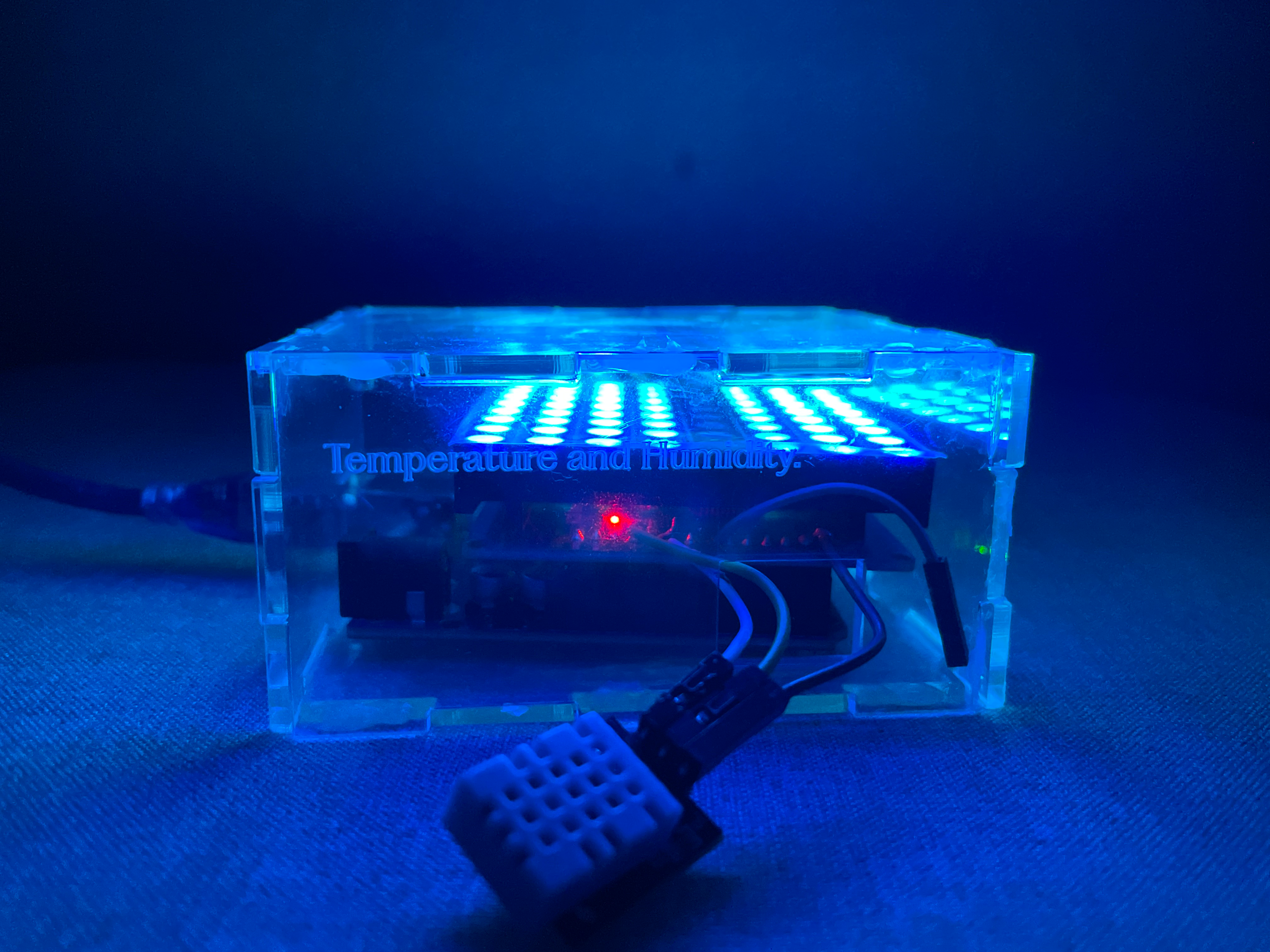
Speculative Device
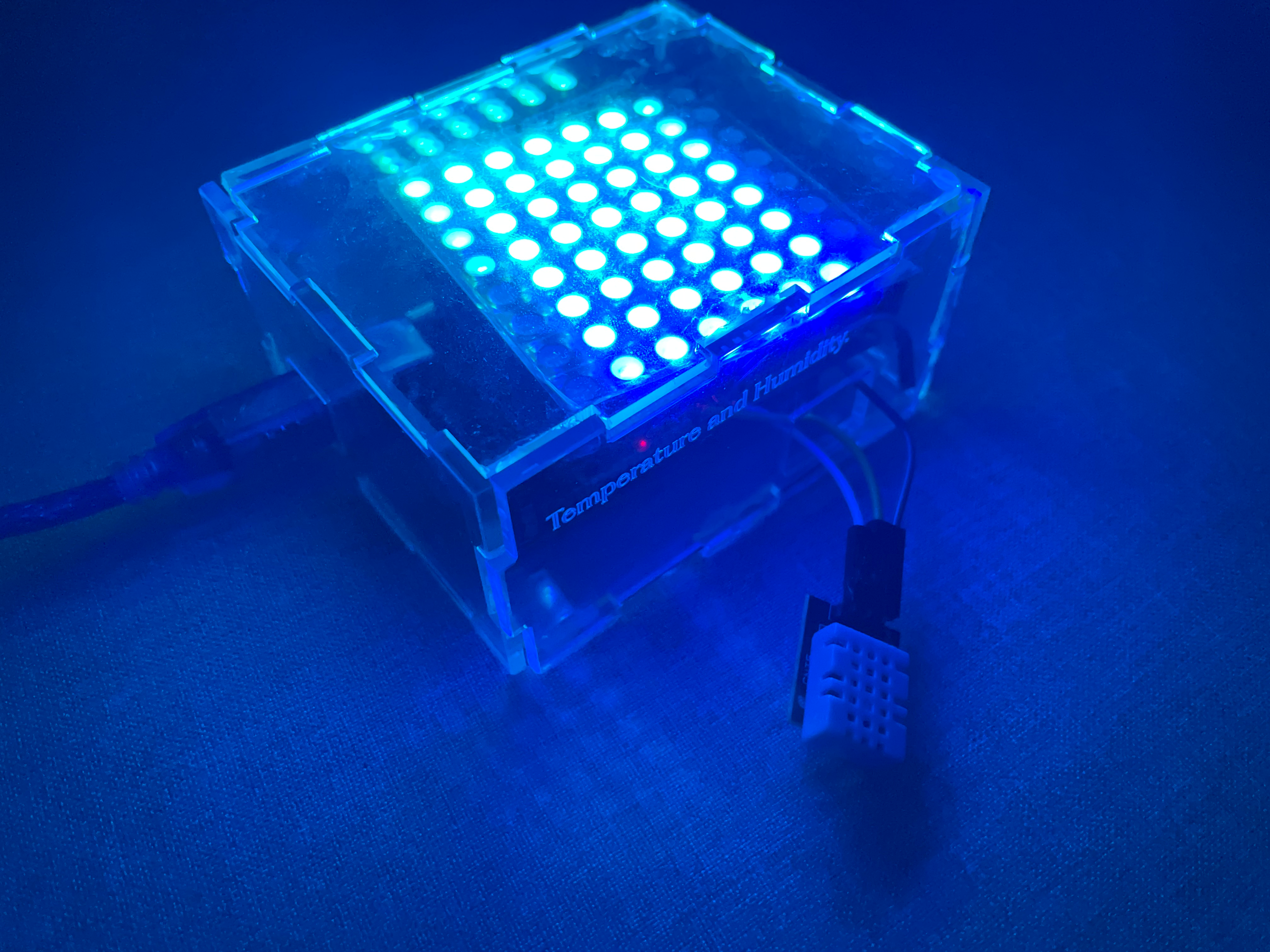
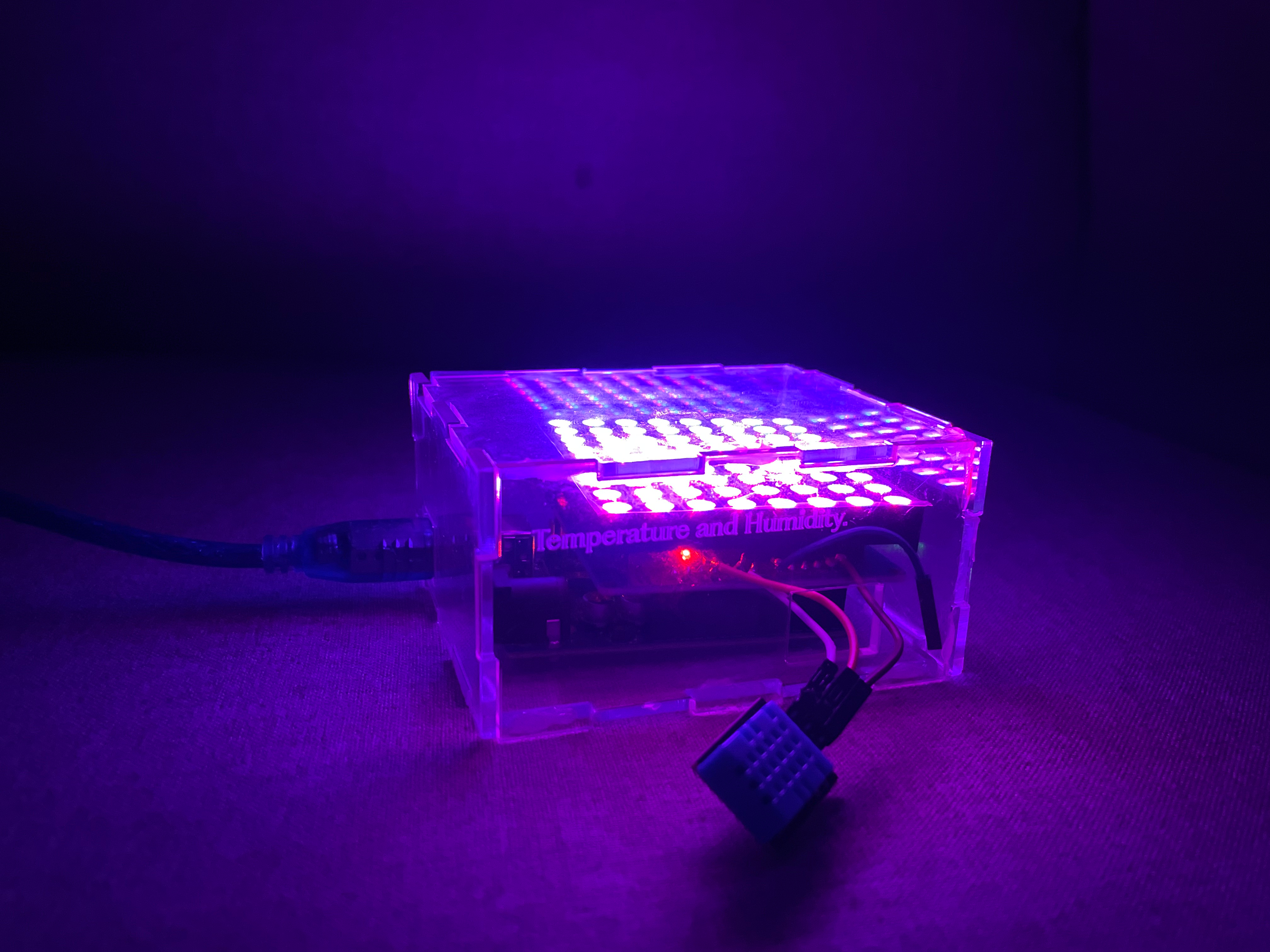
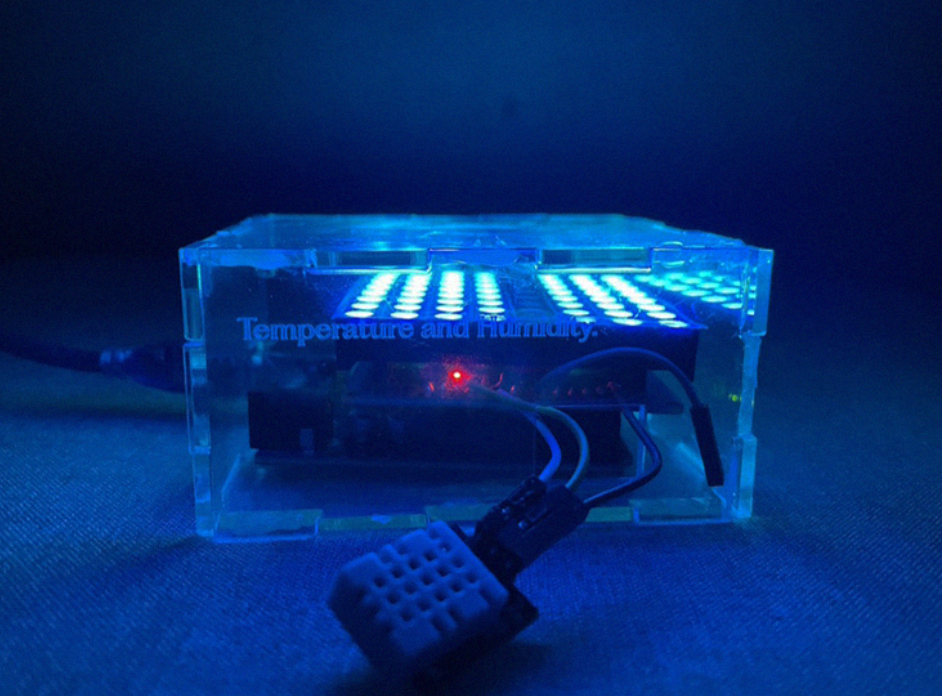
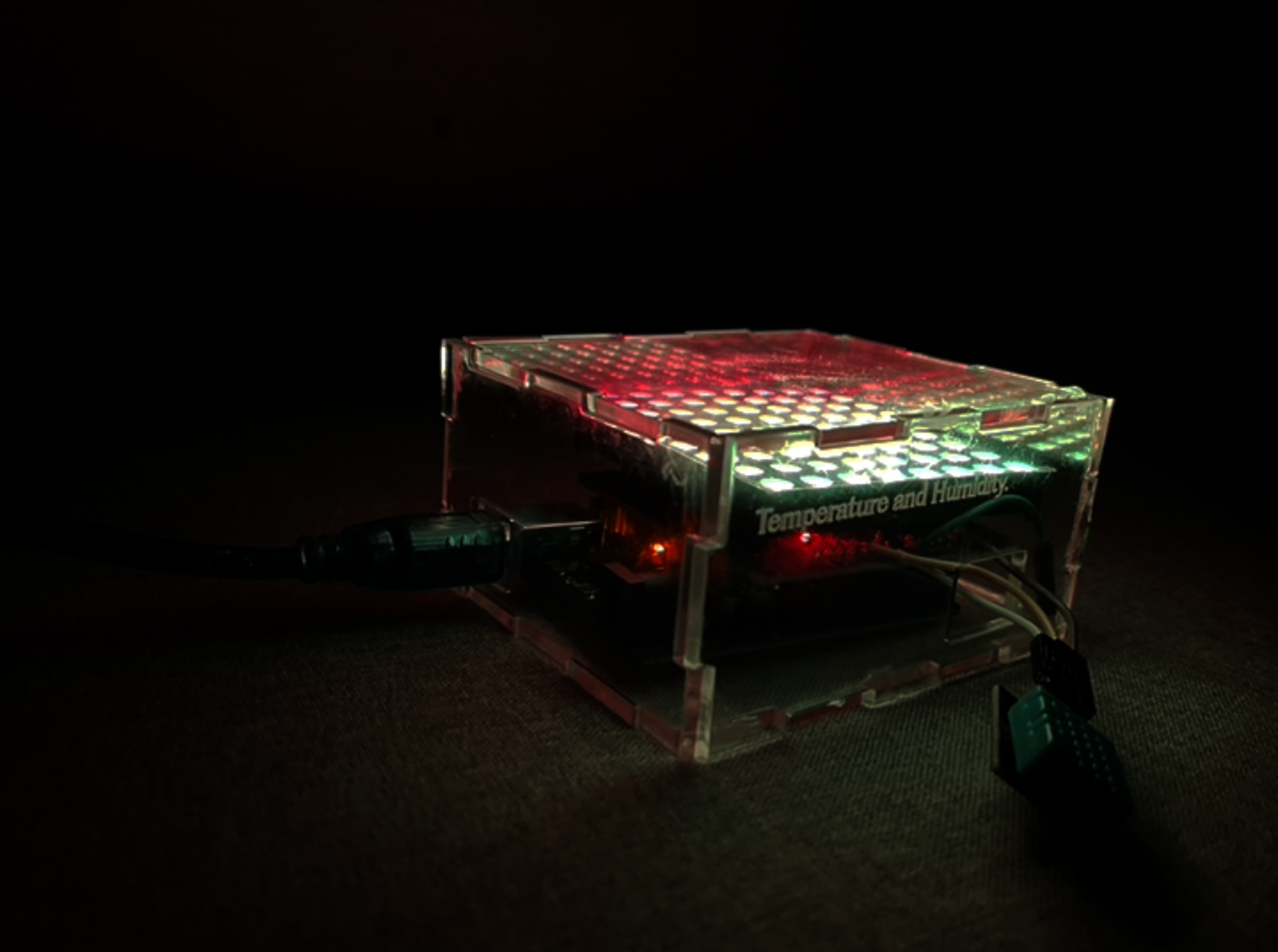
I wanted to design a speculative device that showed this correlation between emotions and temperature—a visualizer for temperature change that reacts to your touch. I wanted the device to be able to sense a change in temperature when a person holds the sensor in their hand. The device displays a color visualization of the measured temperature. Heat index controls the saturation and hue, while humidity affects the transparency and blur of the colors. This color scheme reflects how emotions and temperature are represented.